Join our newsletter
Explore the latest news in education and development
By subscribing you agree to our Privacy Policy



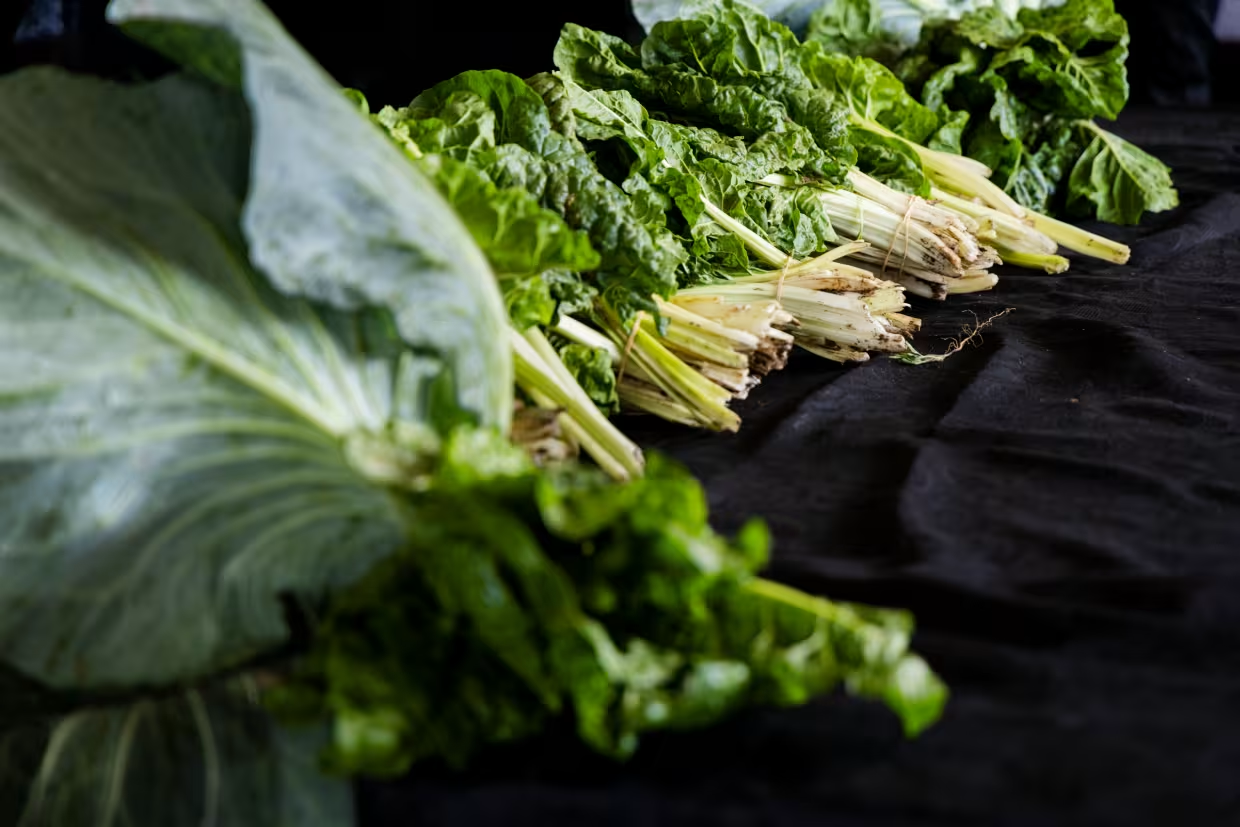
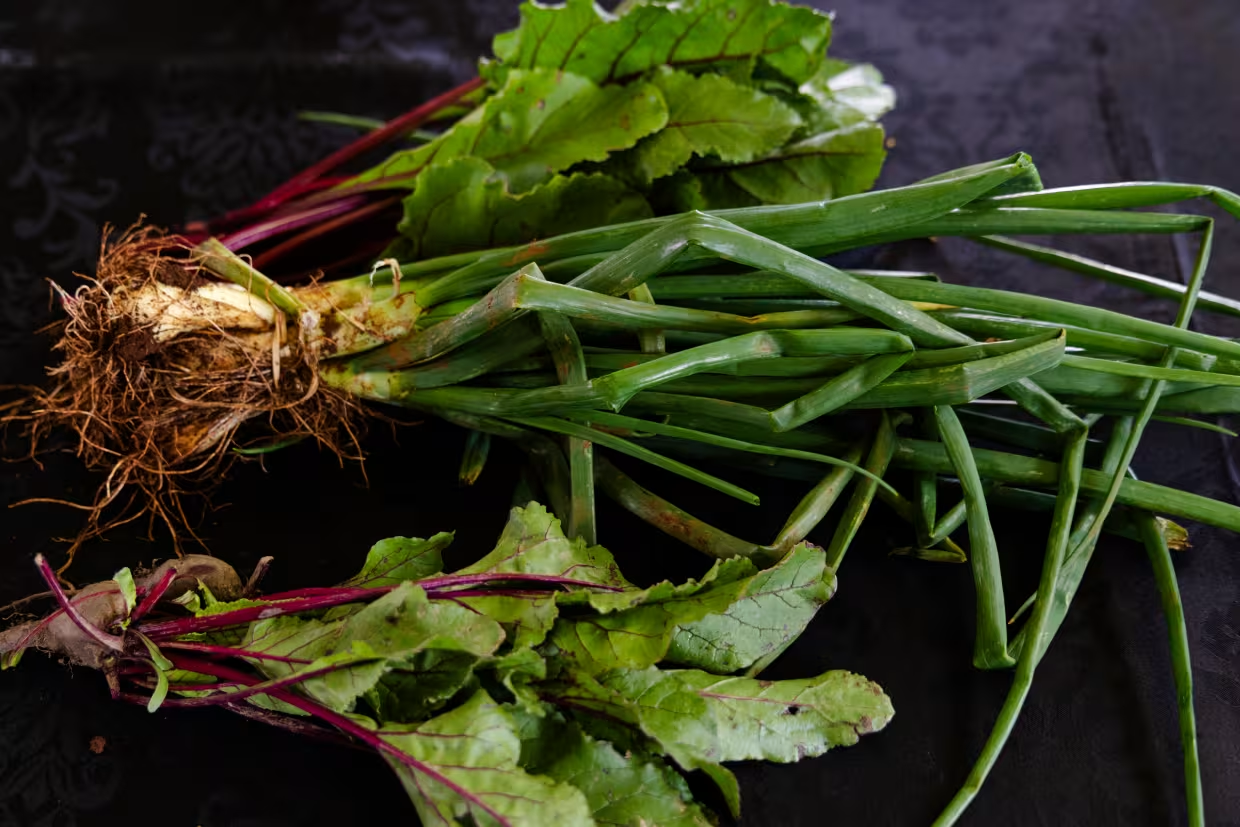
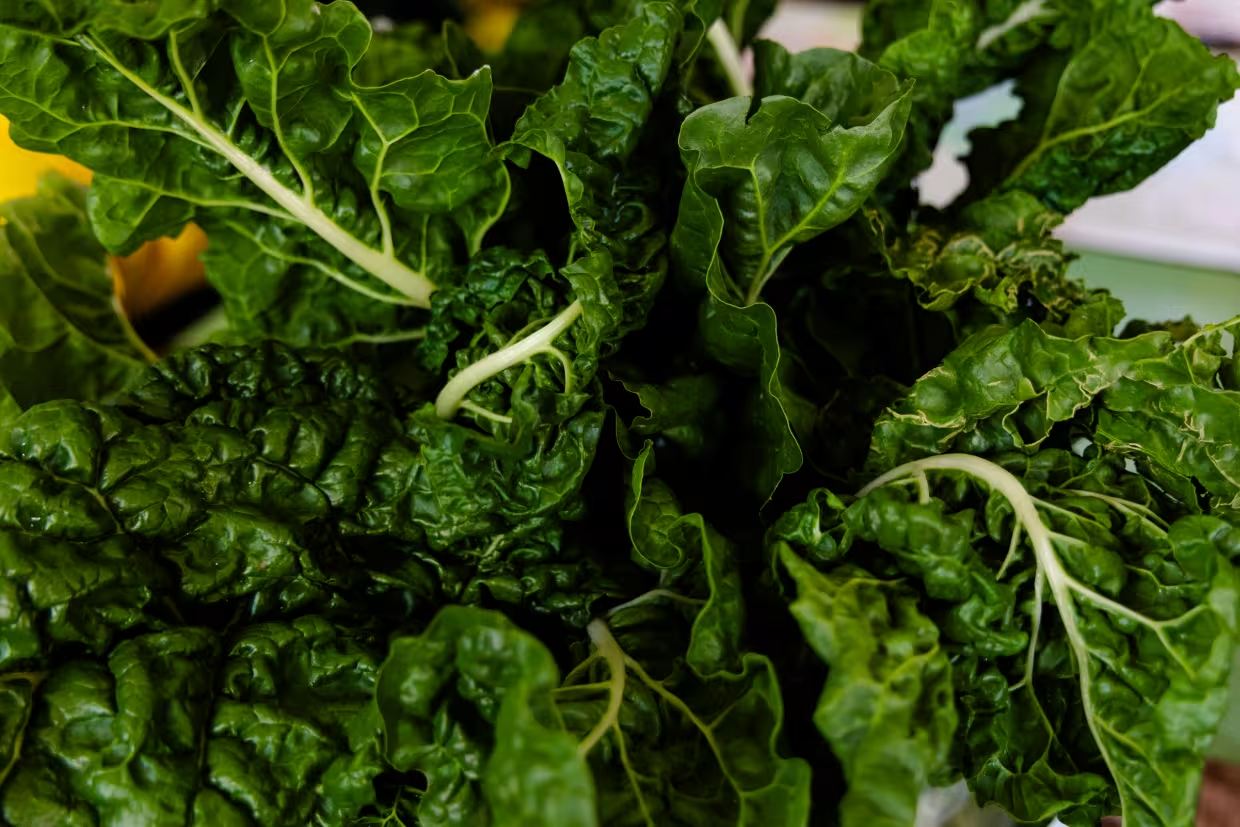
A group of Grade 8 learners tend to their neat rows of spinach, cabbage and beetroot growing on the Qozo High School grounds in rural Bergville, northern KwaZulu-Natal. This garden is not an extracurricular activity; it's part of their Life Orientation lessons and part of how they are learning about climate change, food security and care for the environment.
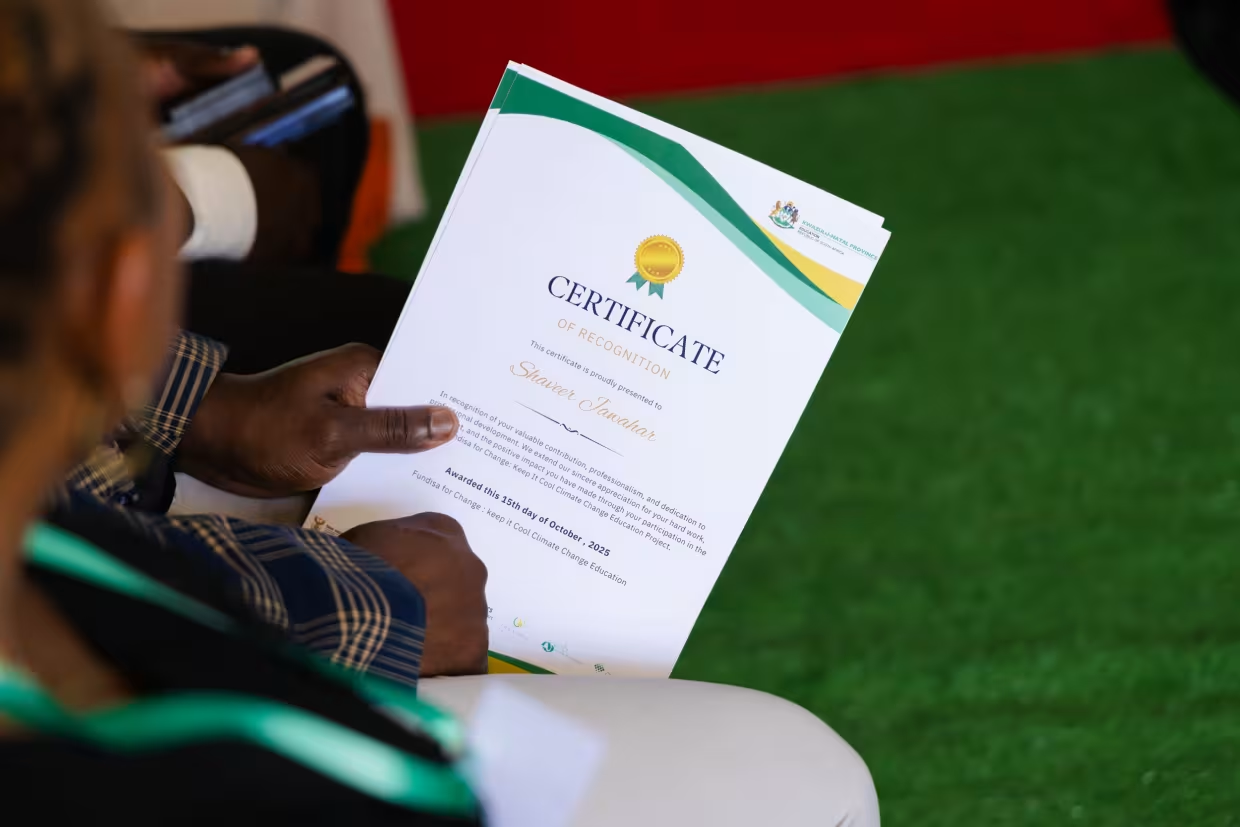
This is one of the ways the Fundisa-for-Change Keep It Cool Climate Change Education (KIC) programme is put into practice. Stories like this one took centre stage at a 2025 reflection event marking the completion of the KIC course, where educators received certificates recognising their commitment to climate change education.
KIC, funded by the Government of Flanders and the Lewis Foundation, is implemented by a consortium led by VVOB, and under the umbrella of Fundisa-for-Change, in collaboration with GreenMatter, the Department of Basic Education and the Department of Forestry, Fisheries and the Environment. KIC helps teachers translate climate change education into practical and locally relevant learning. The main objective is to use the education sector as a strategic resource in South Africa's transition toward a more climate-resilient society.
For thirteen-year-old Akhona Hadebe, climate change is no longer a phrase or an idea in a textbook.
“When it gets too hot, it can cause drought and crops dry out,” she explains. “Air pollution affects climate change and destroys the ozone layer.”
Through KIC-supported life orientation lessons, Akhona and her classmates learnt how gardening can respond to these challenges. “Gardens help lower temperatures,” she says. “They also give us oxygen.”
At her school, the garden has also become a source of food for learners who don’t have food at home. “We give them food from our garden,” But it doesn’t just stop there. Akhona says. At home, the lessons continue. “We started a garden. We recycle plastic and cans and separate them.”
These shifts show that learners are not only understanding climate concepts but also applying them in their daily lives.

Qozo High School Life Orientation teacher Sanelisiwe Ntuli describes how KIC fits naturally into the curriculum.
“It speaks to nature, climate change and sustainability and it aligns with what we already teach.”
Instead of limiting learning to the classroom, lessons move outside. Learners work in groups, prepare soil and care for crops. “They are not just reading about sustainability,” Ntuli says. “They can touch it, see it and feel it.”
That practical approach has changed learner behaviour.

After cooking at school, food used to be dumped anywhere. Now learners say it must go into the soil to help plants grow.
These changes came into focus during a 2025 reflection and celebration event, organised to mark the completion of the Keep It Cool course. At the event, participating educators received certificates of completion, recognising their commitment to strengthening climate change education through Life Orientation.
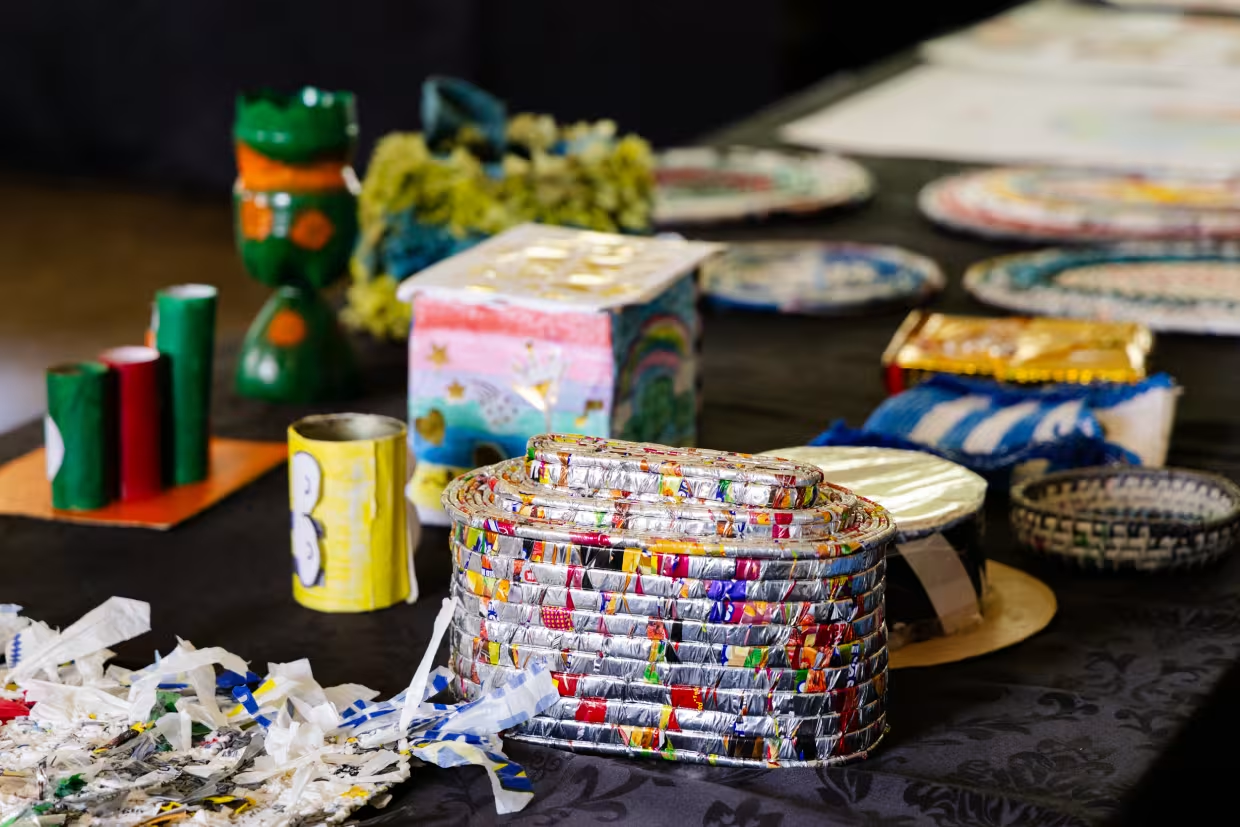
Learners used the occasion to exhibit the projects they had developed as part of their lessons; including food gardens and products made from recycled materials. The exhibition offered a visible snapshot of how classroom learning had translated into practical action.
For district education officials, this hands-on learning strengthens what schools are already required to do. Lumka Ngcobo, a district curriculum official, explains that climate change education is already part of the Curriculum and Assessment Policy Statement. “This programme enhances what teachers are teaching,” she says. “It makes it easier to move beyond the textbook and into practical work.”
Another Qozo High School learner, Asimbonge Ndaba joined the food garden project because he enjoys working with plants. He did not expect it to change how he sees his school environment.
“When we started, others laughed at us,” he recalls. “They said we were wasting time.”
Months later, the garden tells a different story. “Our cabbage is the best in the school,” he says. “Everything is green.”
The project taught him more than how to plant. He learnt about deforestation, careful use of fertiliser and water management during power outages. When electricity cuts stopped water pumps from working, the group found a solution by using stored water and watering cans.
Asimbonge now wants to start his own garden at home. He also collects plastic waste to reuse it as fencing. “Plastics damage the soil,” he explains. “I would rather reuse them than throw them away.”
This sense of ownership is a key reflection for KIC. Learners are not passive recipients of information. They are active participants who make decisions, solve problems and influence others.

For the Government of Flanders, supporting climate change education in schools is a long-term investment.
“It is important that children learn about climate change from a very young age,” says Thomas Castrel, General Representative of Flanders in Southern Africa. “If you start early, there is a good chance it stays with you later in life.”
That early start also has a ripple effect. “Young people take these lessons home,” Castrel adds. “They talk to their families and communities.”
Julie Desmet, who works with the Flanders International Climate Action Programme, saw this firsthand during the learner exhibitions. “What stood out was how proud the learners were,” she says. “When they go home and share what they are doing, they influence others. We need more climate champions like this.”
KwaZulu-Natal has experienced floods, droughts and severe weather events in recent years. According to district officials, this makes climate education urgent rather than optional.
“Learners need to understand what is happening and what they can do,” Ngcobo explains. “They need to know how to respond and how to protect themselves and their communities.”
KIC responds to this reality by linking global climate concepts to local action. Gardening, recycling and water care are not add-ons. They are teaching tools that help learners understand their environment and their role within it.
KIC shows what is possible when curriculum goals, teacher development and international climate support come together in a practical way. It demonstrates that climate change education does not have to remain abstract.
As Akhona puts it simply: “People must protect nature because it is the only world we have.”
Learn more about how education can turn climate awareness into action at: Keep it Cool Climate Change Education Project 2.0 | VVOB
By subscribing you agree to our Privacy Policy